
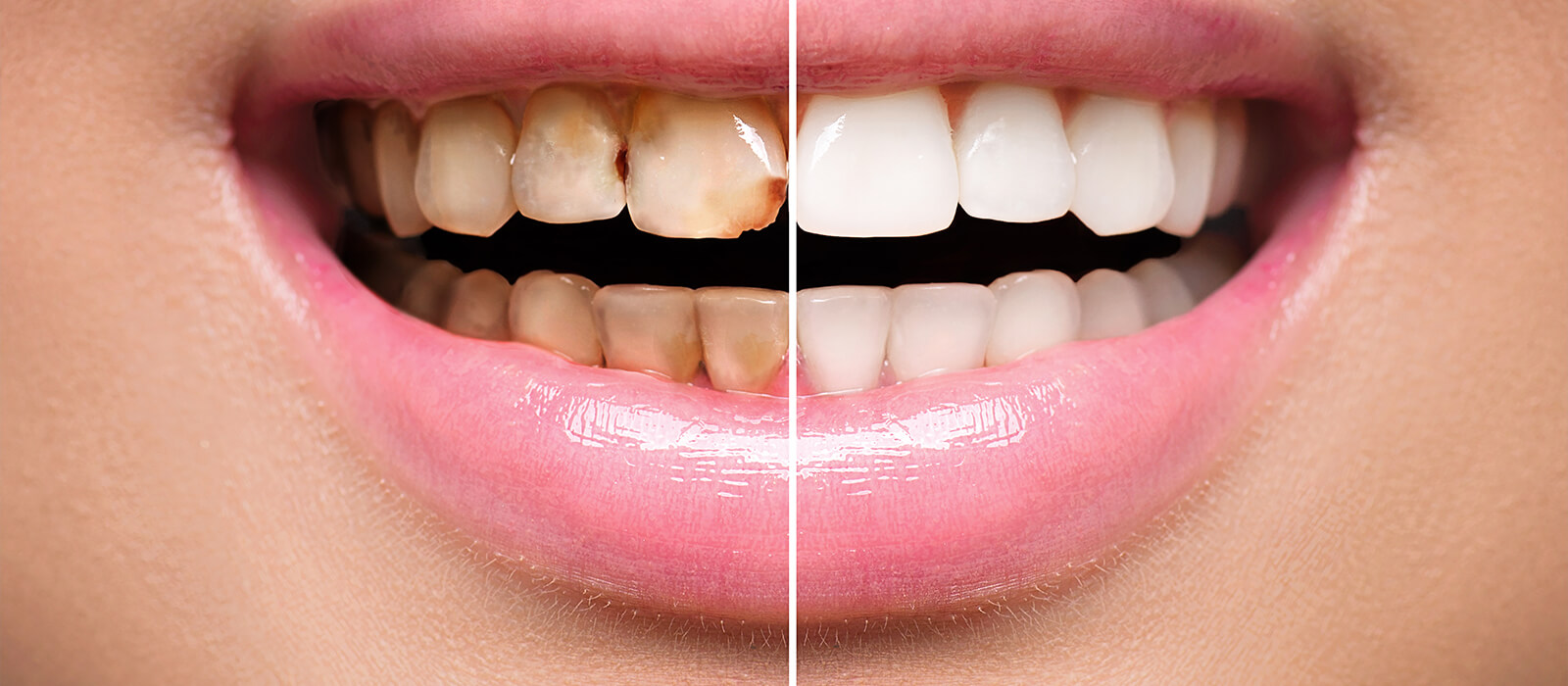
Tanderosie is het verlies van tandglazuur (de harde buiten laag van de tand) door de inwerking van zuren. In tegenstelling tot gaatjes (cariës), wordt deze slijtage niet veroorzaakt door bacteriën, maar direct door zuren uit eten, drinken of maagzuur. Het is een proces dat vaak pas laat wordt opgemerkt, meestal wanneer het glazuur al grotendeels is verdwenen.
Oorzaken van Tanderosie
- Zuren die het glazuur aantasten, komen van buitenaf (extrinsiek) of uit het lichaam zelf (intrinsiek):
- Voeding en dranken (buitenaf): Frisdranken, sportdranken, vruchtensappen, wijn, zure snoepjes, citrusvruchten, appels, azijn en saladedressings.
- Maagzuur (lichaam): Regelmatig overgeven (bijv. boulimia of ochtendmisselijkheid), oprispingen, of refluxziekte (brandend maagzuur).
- Verminderde speekselproductie: Speeksel neutraliseert zuren; bij een droge mond (door medicijnen of aandoeningen) hebben zuren vrij spel.
Symptomen van Tandglazuurverlies
- Gevoelige tanden: Pijn bij koude, warme, zoete of zure voeding en dranken.
- Uiterlijke veranderingen: Tanden worden geler (omdat het onderliggende tandbeen, dentine, zichtbaar wordt), krijgen putjes (cupping) of doorschijnende randen.
- Afgebrokkelde randen: De randen van de voortanden kunnen dunner worden en makkelijker afbreken.
Tanderosie Voorkomen
- Beperk zure momenten: Drink of eet zure producten niet de hele dag door, maar beperk dit tot maximaal 7 eet- of drinkmomenten per dag.
- Wacht met poetsen: Poets niet direct (minimaal 1 uur wachten) na het nuttigen van zure producten. Het glazuur is dan tijdelijk zachter en poets je makkelijker weg.
- Gebruik fluoride: Poets tweemaal daags met fluoridetandpasta om het glazuur te versterken.
- Spoel met water: Spoel na een zure maaltijd je mond met water of melk.
Behandeling
Tanderosie is onomkeerbaar: verdwenen glazuur komt niet terug. Echter, de tandarts kan verdere schade stoppen en de tanden herstellen met bijvoorbeeld composiet (vullingen) om de esthetiek en functie te herstellen.
Tooth erosion is the loss of tooth enamel (the hard outer layer of the tooth) due to the action of acids. Unlike cavities (caries), this wear is not caused by bacteria, but directly by acids from food, drinks, or stomach acid. It is a process that is often noticed only at a late stage, usually when the enamel has already largely disappeared.
Causes of Tooth Erosion
- Acids that attack the enamel come from outside the body (extrinsic) or from within the body itself (intrinsic):
- Food and beverages (external): Soft drinks, sports drinks, fruit juices, wine, sour candies, citrus fruits, apples, vinegar, and salad dressings.
- Stomach acid (internal): Frequent vomiting (e.g., bulimia or morning sickness), belching, or acid reflux (heartburn).
- Reduced saliva production: Saliva neutralizes acids; with a dry mouth (due to medications or medical conditions), acids have free rein.
Symptoms of Tooth Enamel Loss
- Sensitive teeth: Pain when consuming cold, hot, sweet, or acidic foods and beverages.
- Visible changes: Teeth become more yellow (as the underlying dentin becomes visible), develop pits (cupping), or have translucent edges.
- Chipped edges: The edges of the front teeth may become thinner and chip more easily.
Preventing Tooth Erosion
- Limit acidic intake: Do not consume acidic foods or drinks throughout the day; limit this to a maximum of 7 eating or drinking occasions per day.
- Wait before brushing: Do not brush immediately (wait at least 1 hour) after consuming acidic foods or drinks. The enamel is temporarily softer at that time and can be more easily worn away by brushing.
- Use fluoride: Brush twice a day with fluoride toothpaste to strengthen the enamel.
- Rinse with water: After an acidic meal, rinse your mouth with water or milk.
Treatment
Tooth erosion is irreversible: lost enamel does not grow back. However, the dentist can stop further damage and restore the teeth using, for example, composite (fillings) to restore aesthetics and function.